You hit a bump, the wheel tugs a bit, and the car feels just a little unsettled. On another day, you turn into a driveway and hear a clunk from the front. Most drivers lump all of that together as “front-end issues,” but the parts that keep your car pointed straight, and the parts that keep it riding smoothly, are doing different jobs. Knowing how steering and suspension systems differ makes it easier to understand what your car is trying to tell you when something feels off.
How Steering and Suspension Work Together
Steering and suspension systems are separate, but they are bolted to the same corners of the car, and they rely on each other. The steering controls the direction of the wheels, while the suspension manages how those wheels move up and down as the road surface changes. When everything is tight and healthy, the car responds quickly to small inputs and still absorbs bumps without beating you up.
Once wear starts to creep in, the line between steering and suspension symptoms can blur. A loose suspension part can make the steering feel vague, and a worn steering component can make the ride feel harsh or noisy over bumps. That is why a proper inspection looks at both systems instead of treating them as completely separate.
What the Steering System Does
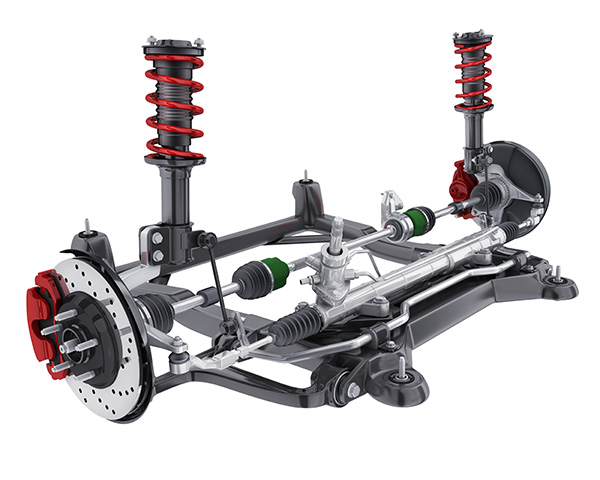
The steering system’s job is to translate your hand movements at the wheel into precise changes at the tires. On most modern vehicles, that involves a steering rack or gearbox, inner and outer tie rods, and, in many cases, electric or hydraulic assist. These parts keep the wheels pointed exactly where you intend, even when the road tries to pull them around.
When steering components are in good shape, the wheel feels centered on the highway, the car tracks straight, and you can make small corrections without drama. As parts wear, you may start to feel extra play at the wheel, pulling to one side, or a delay between turning the wheel and the car actually responding.
What the Suspension System Does
The suspension system is responsible for controlling how the body of the car moves relative to the wheels. It includes shocks or struts, springs, control arms, bushings, and sway bar links. Springs carry the vehicle’s weight, and the shocks or struts control how quickly the body moves after a bump or during a turn.
When suspension is healthy, the car soaks up bumps with one clean motion and settles quickly. You do not feel constant bouncing, and the tires stay firmly in contact with the road. Worn shocks, tired bushings, or loose joints let the body keep moving after every bump, which you feel as a bouncy or choppy ride and hear as knocks or clunks over rough pavement.
Common Signs of Steering Trouble
Steering issues tend to show up as changes in how the car responds to your hands. You might notice:
- A pull to one side that does not go away after a few miles of driving
- Excessive play in the steering wheel before the car responds
- A wandering feeling on the highway that keeps you making constant corrections
- Knocking or clicking when you turn the wheel at low speeds
- A steering wheel that does not return toward the center smoothly after a turn
These symptoms usually point toward worn tie rods, a steering rack issue, or alignment problems. If any of that sounds familiar, it is time to have the front end checked before the wear gets worse.
Common Signs of Suspension Trouble
Suspension concerns typically show up as changes in ride and how the car feels over bumps. Drivers often report:
- A bouncy, floaty feel after hitting a dip or speed bump
- Harsh impacts over small cracks and potholes that never used to feel that sharp
- Clunks, thuds, or rattles when driving over uneven surfaces or turning into driveways
- One corner of the car sits lower than the others when parked
- Uneven tire wear, especially cupping or scalloping on the tread
These signs suggest worn shocks or struts, tired bushings, or loose ball joints and control arms. Left alone, they do more than make the ride uncomfortable; they can reduce traction and braking stability.
Why Fixing One Without the Other Can Backfire
Because steering and suspension parts are so closely linked, only repairing one side of the equation sometimes leaves problems behind. Replacing worn shocks, for example, will improve ride quality, but if loose tie rods or a worn rack are ignored, the car can still wander or chew up tires. Fixing a steering pull without addressing sagging springs can leave the vehicle feeling unbalanced in corners.
When we inspect a car with front end complaints, we look at how everything works together. The goal is to separate steering issues from suspension issues, then build a plan that restores both control and comfort without selling you parts you do not need.
Get Steering and Suspension Service in Richardson, TX with Kwik Kar Auto Repair
If your car feels loose in the steering, bouncy over bumps, or you are hearing new clunks from the front end, there is no need to guess whether it is steering or suspension. We can road test your vehicle, inspect both systems, and explain exactly what needs attention now and what can wait.
Schedule steering and suspension service in Richardson, TX with Kwik Kar Auto Repair, and we will help bring back a stable, confident ride.